When Healthy Eating Drains Your Energy
By Sandy
Plant-based eating is often associated with health. And for good reason. It can be anti-inflammatory, rich in fibre, supportive for the gut and the liver, and deeply nourishing when done with awareness. But there is one subtle point that is often overlooked: not all plant-based meals are balanced.
The hidden challenge of plant-based eating
Many plant-based meals naturally lean toward carbohydrates. This can look like grains and legumes, root vegetables, fruits, or starch-heavy combinations. While these foods are healthy, combining too many of them in one meal — especially without enough fats or protein — can overwhelm the system.
What happens when there are too many carbs
When a meal is high in carbohydrates and not balanced with fats and proteins, blood sugar rises quickly, insulin is released to bring it down, and energy drops shortly after. This can lead to sleepiness after eating, brain fog, cravings later in the day, and unstable energy.
The role of the nervous system
There is also another layer. A large carbohydrate-heavy meal requires more digestive effort and can create a strong 'rest' signal in the body. This is why you may feel calm — or completely sluggish and sleepy — especially if the meal is large, eaten quickly, or lacking balance.
Balance is what creates stability
The goal is not to remove carbohydrates. It is to balance them. A well-structured plant-based meal includes moderate carbohydrates, plant-based protein, healthy fats, fibre and micronutrients. This combination slows digestion, stabilizes blood sugar, supports sustained energy, and reduces inflammation.
What a balanced plate can look like
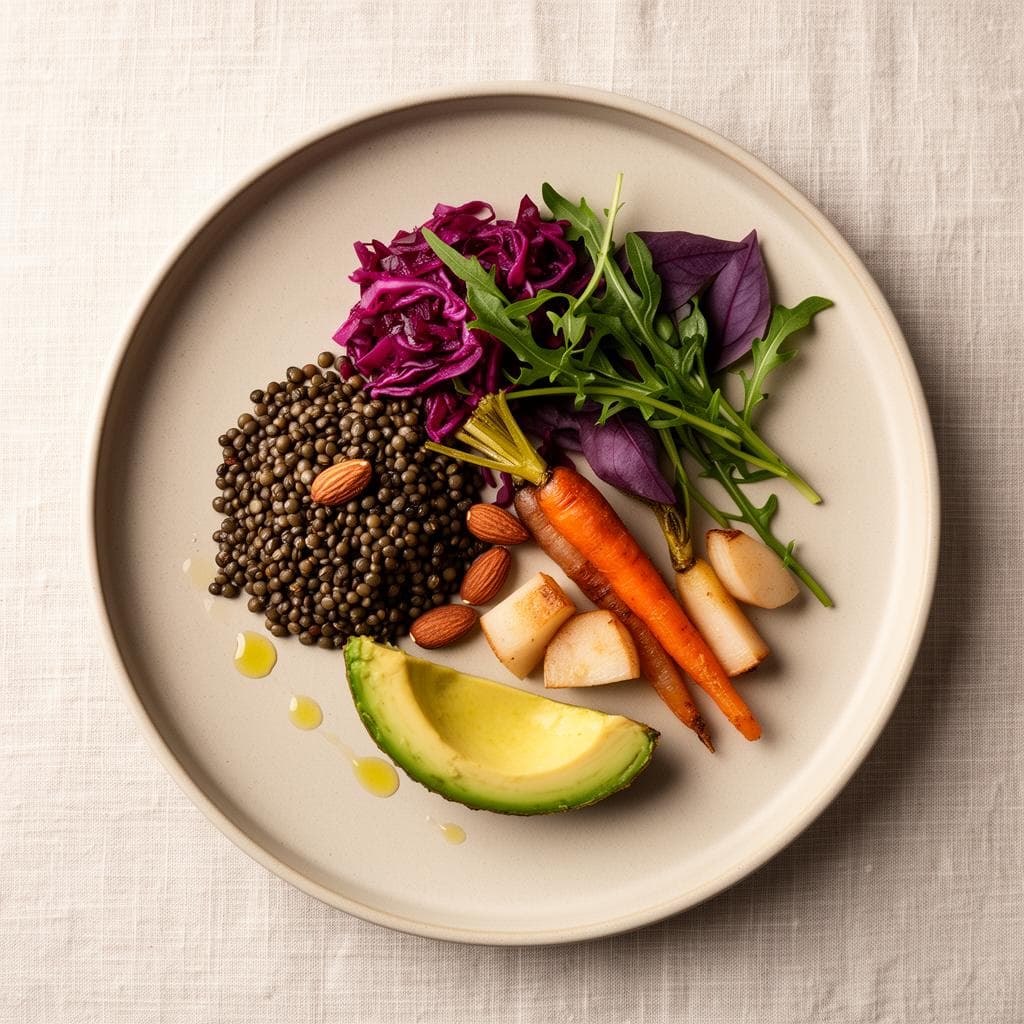
A nourishing, anti-inflammatory plate does not need to be complicated. It can look like this:
- Fermented vegetables — red pickled cabbage (supports gut health)
- Cooked vegetables — carrots and turnip (gentle, grounding, easy to digest)
- Light greens — arugula and mixed purple leaves (bitter and fresh, supports liver)
- Plant-based protein — sprouted black lentils or mung beans (easier to digest, more bioavailable)
- Natural, unrefined fats — roasted almonds, a slice of avocado, or olive oil dressing
Why this works
Each element plays a role. Natural, unrefined fats like olive oil, almonds, and avocado slow down glucose absorption. Protein from lentils and mung beans stabilizes energy and reduces cravings. Fibre from vegetables and greens supports gut health and satiety. Fermented foods nourish the microbiome. Together, they create a meal that feels satisfying, grounding, and sustaining.
This is exactly what we explore during the 4-day culinary immersion at Swara — learning how to build anti-inflammatory, plant-based meals that are truly balanced, and experiencing how different combinations affect your energy and digestion.
A gentle reminder
Even the healthiest foods can become imbalanced when portions are too large, meals are too fast, or combinations are not considered. The body does not only respond to what you eat — it responds to how much, how fast, and how balanced.
A final reflection
Plant-based eating can be deeply healing. But healing is not found in one category of food. It is found in balance, simplicity, awareness, and consistency. And when meals are built with this in mind, the body responds with stable energy, a clearer mind, and more ease in digestion.
Stay Inspired
Receive seasonal inspiration, recipes, and mindful living tips from Swara Slow Living.