What Your Body Has Been Asking For All Along
By Sandy
In a world that often looks for quick fixes, healing tends to unfold in a quieter, more consistent way. One of the simplest — and most profound — ways to support the body is through daily herbal infusions.
Not as a trend. Not as a one-time remedy. But as a relationship.
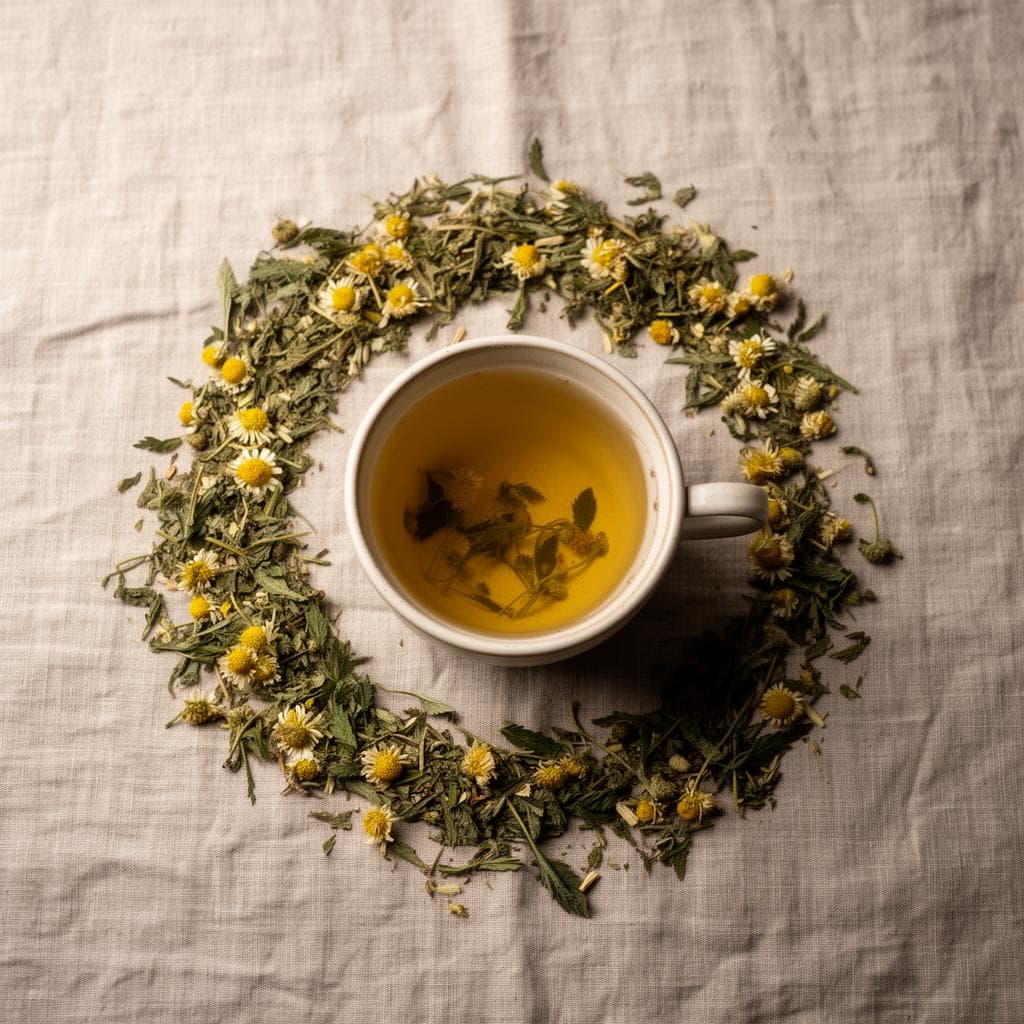
A cup, prepared each day, becomes more than hydration — it becomes nourishment, ritual, and communication with the body.
Why Consistency Matters
Herbal infusions work gently, yet deeply. Unlike stimulants or strong interventions, plants offer their gifts in a way the body can recognize and integrate over time. Their impact is not always immediate — but it is cumulative.
This is where the real shift happens: small, daily inputs that rebuild the body from within.
Consistency allows the body to:
- Replenish mineral stores
- Regulate systems gradually
- Rebuild from depletion rather than override it
Plants as Nutritional Allies
When we think of nutrition, we often think of food — but many plants are exceptionally nutrient-dense, especially when prepared as infusions.
Take nettle (Urtica dioica), for example. Nettle is rich in:
- Iron
- Calcium
- Magnesium
- Silica
- Chlorophyll
It is considered a deeply remineralizing plant — one that helps rebuild what modern life tends to deplete.
Other mineral-rich allies include:
- Oatstraw — soothing, rich in calcium and magnesium, supportive for the nervous system
- Raspberry leaf — toning, mineral-rich, especially supportive for reproductive health
- Horsetail — high in silica, supporting connective tissue, skin, and hair
What Does It Mean to Mineralize the Body?
To mineralize the body is to restore its foundational elements. Minerals are essential for:
- Nerve communication
- Muscle function
- Enzyme activity
- Hormonal balance
When depleted, the body may express:
- Fatigue
- Anxiety or nervous system imbalance
- Weakened digestion
- Hormonal irregularities
Long infusions (4–8 hours) allow these minerals to be gently extracted into water, creating a form that is deeply absorbable and easy for the body to integrate.
The Wisdom of Plant Synergy
An herbalist rarely works with a single plant alone. Instead, they work with synergy — the art of combining plants so that they enhance and balance one another.
Synergy means:
- One plant supports the absorption of another
- One softens or complements the action of another
- Together, they create a more complete and balanced effect
It is not about intensity — it is about intelligence and harmony.
Simple Herbal Synergies
| Purpose | Plants |
|---|---|
| For Calming | Oatstraw · Lemon balm · Chamomile |
| For Digestion | Fennel · Peppermint · Ginger |
| For Gentle Energy | Nettle · Peppermint · Rosehip |
Beyond Nutrition: The Ritual
Herbal infusions offer more than physical nourishment. They create pause.
The act of boiling water, selecting the plants, allowing time to steep, sitting down to drink… becomes a moment of reconnection. A softening. A return.
If this resonates, the next layer of this practice is understanding how these simple rituals directly support your nervous system — the conductor of your entire physiology. → Continue reading: The Nervous System: The Maestro of Your Inner Orchestra
Contraindications & Considerations
- Some herbs are not suitable during pregnancy or breastfeeding
- Certain plants may interact with medications
- Individuals with specific health conditions should seek guidance
- Always ensure correct identification and high-quality sourcing
When in doubt, work with a qualified herbalist.
Stay Inspired
Receive seasonal inspiration, recipes, and mindful living tips from Swara Slow Living.